Buy smart-innovation.eu ?
We are moving the project
smart-innovation.eu .
Are you interested in purchasing the domain
smart-innovation.eu ?
domain@kv-gmbh.de · 0541-91531010
Buy smart-innovation.eu ?
What are Japanese honorific suffixes?
Japanese honorific suffixes are used to show respect and politeness when addressing or referring to others. They are attached to the end of a person's name or title, and the choice of suffix depends on the person's social status, age, and relationship to the speaker. Common honorific suffixes include -san (used for both men and women in formal and informal situations), -sama (used to show utmost respect, often for customers or people of higher status), and -chan (used for endearment, often for children, close friends, or pets). Honorific suffixes are an important aspect of Japanese language and culture, reflecting the emphasis on social hierarchy and respect. **
What is the Japanese honorific with "cchi"?
The Japanese honorific with "cchi" is typically used to show familiarity or affection towards someone. It is often added to a person's name or nickname to express closeness or intimacy. This honorific is commonly used among friends, family members, or people who have a close relationship with each other. **

Similar search terms for Honorific
Top-Angebote
Products related to Honorific:
-
Novadiet Prosnova Progress 60 CapsulesNutrition and Supplements Special supplements Novadiet Prosnova Progress 60 Capsules If you're a man over 40, you've likely begun to notice urinary problems. Benign prostatic hyperplasia (BPH) is the most common reason for male urological consultations. It begins to manifest itself after the age of 40, affecting 80% of men by age 70 and 90% of those over 85. It is a benign, age-related enlargement of the prostate, associated with low testosterone levels, a slow-growing condition that causes significant discomfort and significantly impacts quality of life. Prostate growth compresses the urethra as it passes through the gland, causing a series of secondary discomforts: difficulty starting to urinate; a thin, weak, and intermittent urine stream; a feeling of not having emptied the bladder after urinating; having to urinate multiple times during the day (pollakiuria) and at night (nocturia); urinary incontinence, abdominal pain, and discomfort when urinating may also occur. Take one capsule with breakfast and another with dinner, with water. Recommended daily dose: 2 capsules.15,92 £*Shipping: 3,99 £Secure redirect to the provider
-
Smart Shopping Spot High Efficiency Garlic Press & Slicer Manual Pull Kitchen Tool greenTransform your cooking routine with this versatile garlic press designed for speed, ease, and precision. Perfect for home cooks who love bold flavor without the mess, this 2in1 tool lets you crush and slice garlic in seconds. Its manual pull...34,97 $*Shipping: 0,00 $Secure redirect to the provider




-
What is the Japanese honorific for brother?
The Japanese honorific for brother is "お兄さん" (onii-san) when addressing an older brother and "弟" (otouto) when addressing a younger brother. These honorifics are used to show respect and politeness when referring to one's brother in Japanese. **
-
What is the Japanese honorific for an older brother?
The Japanese honorific for an older brother is "onii-san" (お兄さん) or "onii-chan" (お兄ちゃん) when speaking in a more familiar or affectionate tone. These honorifics are used to show respect and affection towards an older brother in Japanese culture. **
-
How do I receive the English honorific title Sir and be elevated to knighthood?
To receive the English honorific title Sir and be elevated to knighthood, one must be nominated for the honor by someone else. Typically, individuals are nominated for their significant contributions to society, such as in the fields of charity, public service, or the arts. The nomination process involves a thorough review by the government and ultimately approval by the Queen. Once approved, the individual will participate in a ceremony where they will be dubbed a knight and receive the title Sir. **
-
How does human development progress?
Human development progresses through a series of stages that are influenced by both biological and environmental factors. These stages include physical, cognitive, emotional, and social development. As individuals grow and mature, they acquire new skills, knowledge, and experiences that shape their understanding of the world and their place in it. Development is a lifelong process that continues from infancy through adulthood and is influenced by a combination of genetics, environment, and personal experiences. **


How does language development progress?
Language development progresses in stages, starting with cooing and babbling in infancy, then moving on to single words, two-word phrases, and eventually more complex sentences. Children learn language through exposure to spoken language, imitation, and reinforcement from caregivers. As they grow, they continue to expand their vocabulary, grammar, and communication skills through interactions with others and practice in various social contexts. Language development is a gradual process that is influenced by both biological factors and environmental experiences. **
How does sensory development progress?
Sensory development progresses through a series of stages, beginning with basic sensory experiences such as touch, taste, and smell in infancy. As children grow, they develop more refined sensory abilities, such as improved vision and hearing, and begin to integrate sensory information to make sense of their environment. This process continues into adolescence and adulthood, with individuals becoming more adept at interpreting and responding to sensory stimuli. Overall, sensory development progresses from basic sensory experiences to more complex and integrated sensory abilities as individuals mature. **
Top-Angebote
Products related to Honorific:
-
Pan Make Brilliant Work: Lessons on Creativity, Innovation and Success by Rod Judkins - Paperback - Self-Help/Business Creativity Guide, Author ofMake Brilliant Work is an inspiring guide by Rod Judkins, drawing on the real-life stories of visionaries from Frida Kahlo to Steve Jobs. This paperback book reveals the methods and mindsets that turn ordinary effort into extraordinary results. Judkins proves that talent alone never guaranteed success — persistence, risk-taking and original thinking did. A motivating read for anyone wanting to unlock their creative potential at work or in life. The book profiles figures who failed at school, were told they lacked talent, or were fired more than once, yet went on to achieve great things. Written by Rod Judkins, published by Pan Macmillan, this book is a reassuring truth: you don't have to be naturally brilliant to produce brilliant work.2,99 £*Shipping: 2,99 £Secure redirect to the provider
-
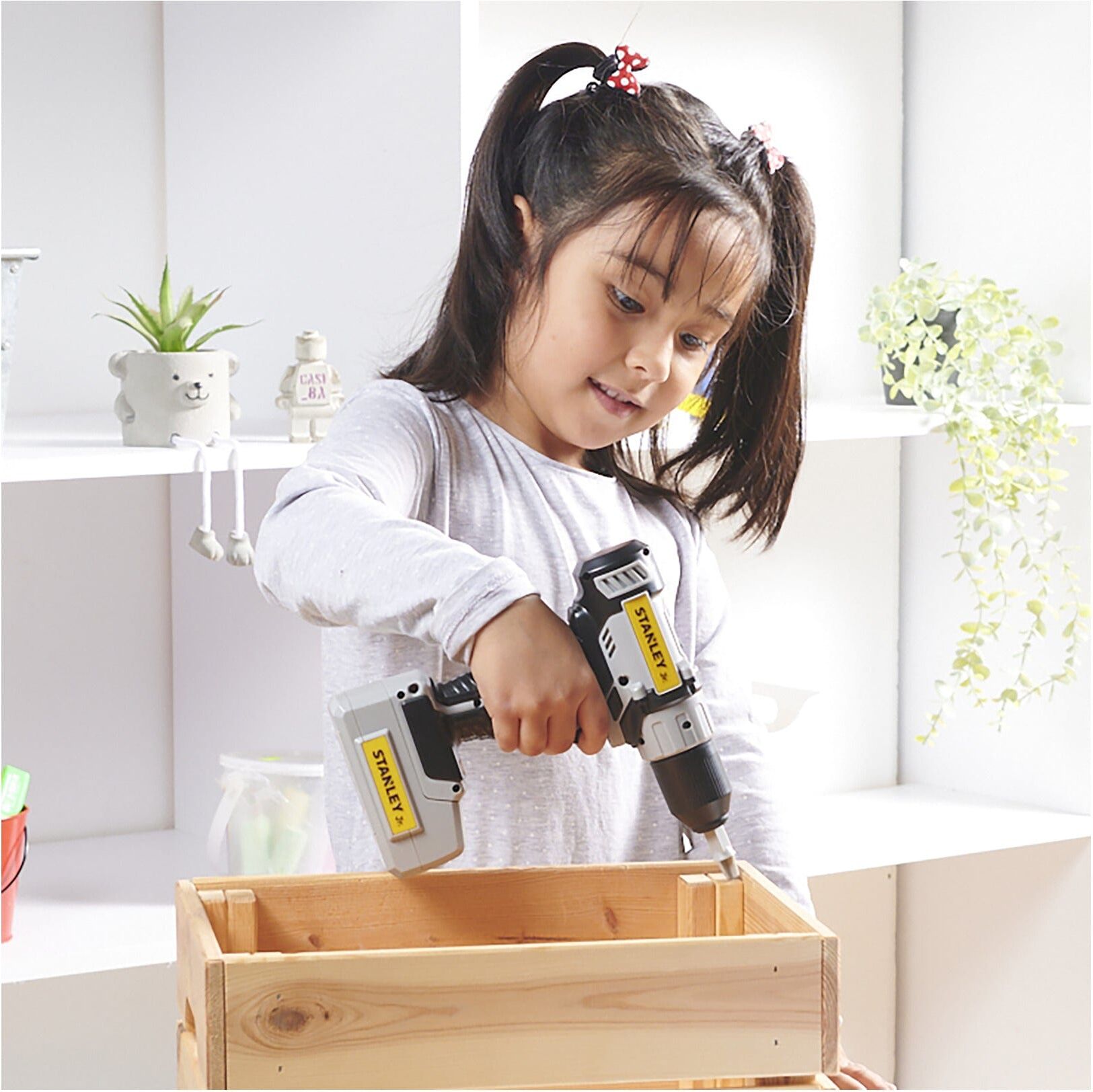
Stanley Jr. Battery Operated Drill Toy Playset - Red Tool Box - 10 Piece Set - Encourages Creativity and Motor Skills DevelopmentIntroducing the Stanley Jr. Battery Operated Drill, a toy designed for kids to engage in imaginative play while developing their motor skills. This interactive drill is battery operated, eliminating the need for cords. Made with child-friendly materials, it ensures a safe playtime experience. Perfect for DIY projects, it encourages creativity and building confidence in young minds. Give your child the tools they need for imaginative play with the Stanley Jr. Battery Operated Drill.12,72 £*Shipping: 3,95 £Secure redirect to the provider
-
Novadiet Prosnova Progress 60 CapsulesNutrition and Supplements Special supplements Novadiet Prosnova Progress 60 Capsules If you're a man over 40, you've likely begun to notice urinary problems. Benign prostatic hyperplasia (BPH) is the most common reason for male urological consultations. It begins to manifest itself after the age of 40, affecting 80% of men by age 70 and 90% of those over 85. It is a benign, age-related enlargement of the prostate, associated with low testosterone levels, a slow-growing condition that causes significant discomfort and significantly impacts quality of life. Prostate growth compresses the urethra as it passes through the gland, causing a series of secondary discomforts: difficulty starting to urinate; a thin, weak, and intermittent urine stream; a feeling of not having emptied the bladder after urinating; having to urinate multiple times during the day (pollakiuria) and at night (nocturia); urinary incontinence, abdominal pain, and discomfort when urinating may also occur. Take one capsule with breakfast and another with dinner, with water. Recommended daily dose: 2 capsules.15,92 £*Shipping: 3,99 £Secure redirect to the provider
-
What are Japanese honorific suffixes?
Japanese honorific suffixes are used to show respect and politeness when addressing or referring to others. They are attached to the end of a person's name or title, and the choice of suffix depends on the person's social status, age, and relationship to the speaker. Common honorific suffixes include -san (used for both men and women in formal and informal situations), -sama (used to show utmost respect, often for customers or people of higher status), and -chan (used for endearment, often for children, close friends, or pets). Honorific suffixes are an important aspect of Japanese language and culture, reflecting the emphasis on social hierarchy and respect. **
-
What is the Japanese honorific with "cchi"?
The Japanese honorific with "cchi" is typically used to show familiarity or affection towards someone. It is often added to a person's name or nickname to express closeness or intimacy. This honorific is commonly used among friends, family members, or people who have a close relationship with each other. **
-
What is the Japanese honorific for brother?
The Japanese honorific for brother is "お兄さん" (onii-san) when addressing an older brother and "弟" (otouto) when addressing a younger brother. These honorifics are used to show respect and politeness when referring to one's brother in Japanese. **
-
What is the Japanese honorific for an older brother?
The Japanese honorific for an older brother is "onii-san" (お兄さん) or "onii-chan" (お兄ちゃん) when speaking in a more familiar or affectionate tone. These honorifics are used to show respect and affection towards an older brother in Japanese culture. **
Similar search terms for Honorific
-
Smart Shopping Spot High Efficiency Garlic Press & Slicer Manual Pull Kitchen Tool greenTransform your cooking routine with this versatile garlic press designed for speed, ease, and precision. Perfect for home cooks who love bold flavor without the mess, this 2in1 tool lets you crush and slice garlic in seconds. Its manual pull...34,97 $*Shipping: 0,00 $Secure redirect to the provider
-
Tools, Home & Hobby Smart Waterless Essential Oil Diffuser With Bluetooth Cold Air Scent Technology Smart Waterless Essential Oil Diffuser With Bluetooth Cold Air Scent TechnologyTransform everyday spaces into a fresh, inviting retreat with this waterless essential oil diffuser. Designed for homes, offices, spas, hotels, and other larger spaces, it distributes fragrance across areas up to 1,000 sq. ft. using efficient cold...129,97 $*Shipping: 0,00 $Secure redirect to the provider
-
Smart Shopping Spot Flexible Door Draft Stopper Soundproofing & Weatherproof Seal For Energy Efficiency blackTired of cold drafts, noisy rooms, and high energy bills The Premium Flexible Door Draft Stopper is designed to block wind, sound, and dust, creating a more peaceful, comfortable environment in your home. Made from highquality PVC, this door draft...34,97 $*Shipping: 0,00 $Secure redirect to the provider
-
How do I receive the English honorific title Sir and be elevated to knighthood?
To receive the English honorific title Sir and be elevated to knighthood, one must be nominated for the honor by someone else. Typically, individuals are nominated for their significant contributions to society, such as in the fields of charity, public service, or the arts. The nomination process involves a thorough review by the government and ultimately approval by the Queen. Once approved, the individual will participate in a ceremony where they will be dubbed a knight and receive the title Sir. **
-
How does human development progress?
Human development progresses through a series of stages that are influenced by both biological and environmental factors. These stages include physical, cognitive, emotional, and social development. As individuals grow and mature, they acquire new skills, knowledge, and experiences that shape their understanding of the world and their place in it. Development is a lifelong process that continues from infancy through adulthood and is influenced by a combination of genetics, environment, and personal experiences. **
-
How does language development progress?
Language development progresses in stages, starting with cooing and babbling in infancy, then moving on to single words, two-word phrases, and eventually more complex sentences. Children learn language through exposure to spoken language, imitation, and reinforcement from caregivers. As they grow, they continue to expand their vocabulary, grammar, and communication skills through interactions with others and practice in various social contexts. Language development is a gradual process that is influenced by both biological factors and environmental experiences. **
-
How does sensory development progress?
Sensory development progresses through a series of stages, beginning with basic sensory experiences such as touch, taste, and smell in infancy. As children grow, they develop more refined sensory abilities, such as improved vision and hearing, and begin to integrate sensory information to make sense of their environment. This process continues into adolescence and adulthood, with individuals becoming more adept at interpreting and responding to sensory stimuli. Overall, sensory development progresses from basic sensory experiences to more complex and integrated sensory abilities as individuals mature. **
* All prices are inclusive of VAT and, if applicable, plus shipping costs. The offer information is based on the details provided by the respective shop and is updated through automated processes. Real-time updates do not occur, so deviations can occur in individual cases. ** Note: Parts of this content were created by AI.